
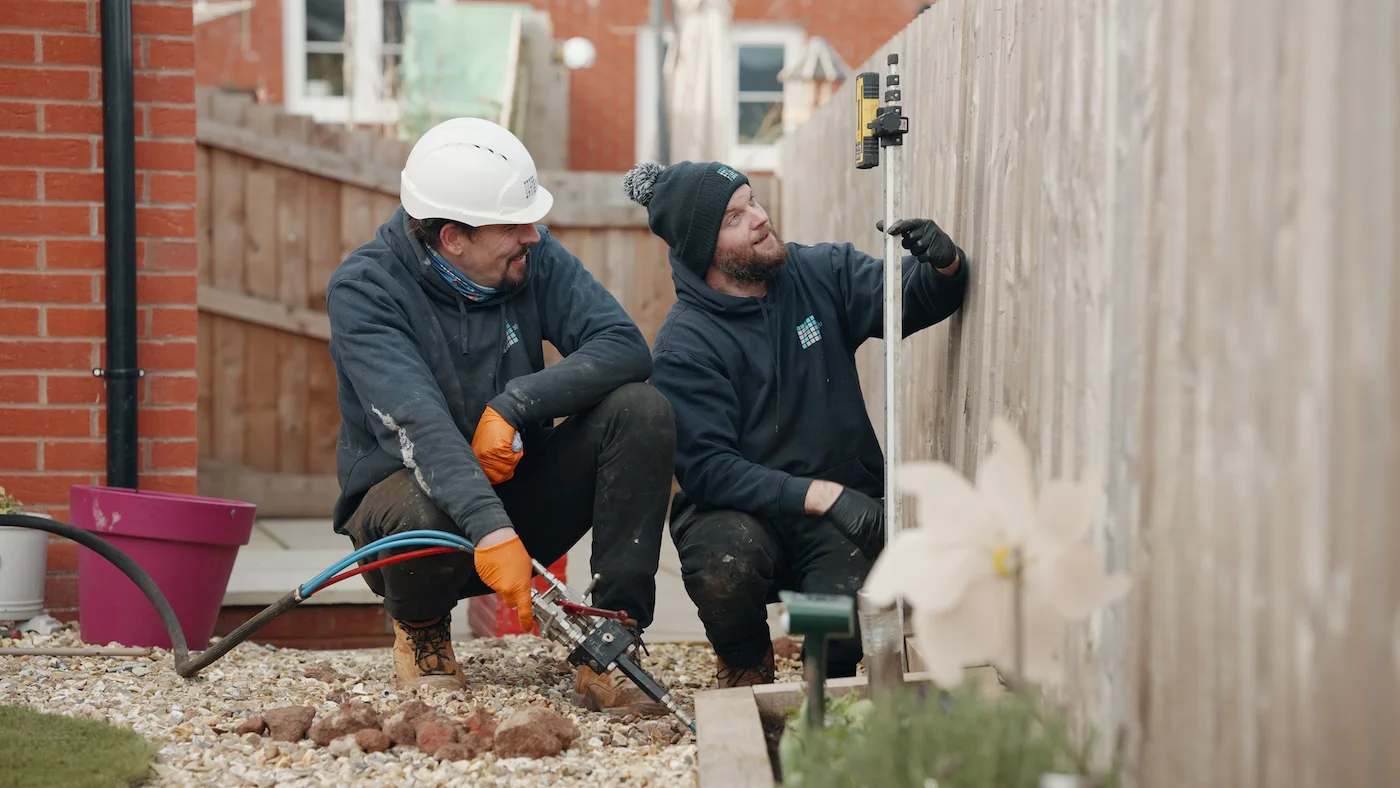
When cracks begin appearing in walls, doors stop closing properly, or floors start to slope, it’s often a sign that the foundation beneath your home is moving. In Australia, shifting soils, seasonal moisture changes, and reactive clay can all contribute to subsidence. For decades, traditional underpinning has been the go-to solution. Today, however, modern techniques like resin injection underpinning are changing the way foundation problems are addressed.
So, what’s the difference between resin injection and traditional underpinning — and which one is right for your property? Let’s break it down.
What is Traditional Underpinning?
Traditional underpinning is a structural repair method designed to strengthen and stabilise an existing foundation. It typically involves excavating sections beneath the footing of a home and pouring concrete to extend the foundation deeper into stable soil.
How It Works
- Sections of soil beneath the foundation are excavated in stages.
- Concrete piers or pads are poured under the existing footings.
- The new concrete cures and supports the structure.
- The process is repeated around the affected areas.
Key Characteristics
- Labour-intensive
- Requires excavation
- Involves heavy equipment
- Can take several days to weeks depending on scope
- Often more disruptive to landscaping and access areas
Traditional underpinning has a long track record and remains a reliable solution for severe structural movement or where substantial load-bearing reinforcement is required.
What About Resin Injection?
Resin injection is a newer, less invasive technique that stabilises and re-levels foundations by injecting expanding polyurethane resin into the ground beneath a structure. Rather than excavating and pouring concrete, small holes are drilled into the affected area. A specialised resin is then injected under pressure. As it expands, it compacts the surrounding soil, fills voids, and gently lifts the structure back toward its original position.
How It Works
- Small access holes are drilled through concrete slabs or around foundations.
- Expanding resin is injected beneath the structure.
- The resin expands, compacting soil and filling gaps.
- The foundation is stabilised and, in some cases, lifted.
Key Characteristics
- Minimal excavation
- Faster installation (often completed in a day)
- Less mess and disruption
- Lightweight yet strong
- Immediate curing in most cases
The Core Differences
- Method of Stabilisation: Traditional underpinning physically extends the foundation deeper using concrete. Resin injection improves the strength and density of the soil beneath the existing foundation, creating a stabilised base without major structural alteration.
- Disruption and Accessibility: Traditional underpinning requires significant excavation – gardens, driveways, and pathways may be disturbed. Resin injection requires only small drill holes, making it ideal for properties with limited access or where minimal disruption is preferred.
- Project Timeline: Traditional underpinning can take weeks depending on weather, curing time, and project complexity. Resin injection is typically much faster, often completed within a day or two.
- Suitability: Traditional underpinning is often recommended when there is severe structural movement, footings need deep reinforcement, or the building is heavy or multi-storey. Resin injection may be suitable when the issue is soil voids or minor to moderate subsidence, slabs have settled unevenly, or quick/minimally invasive repair is preferred.
- Cost Considerations: Costs vary depending on severity and access. Traditional underpinning may involve higher labour and restoration costs due to excavation. Resin injection can sometimes be more cost-effective for smaller-scale subsidence, particularly where minimal restoration is required afterwards.
When is Resin Injection the Better Option?
Resin injection is particularly effective in Australian conditions where reactive clay soils shrink and swell with moisture changes. If subsidence is due to soil movement rather than a fundamentally inadequate footing system, resin injection can provide a targeted and efficient solution. It’s also attractive for:
- Residential slab homes
- Commercial spaces where downtime must be minimised
- Driveways and pathways that have settled
- Situations where excavation would be difficult or costly
Because the resin expands rapidly and cures quickly, the results are often immediate, allowing property owners to resume normal use with minimal delay.
When Traditional Underpinning is Still Necessary
Despite the advantages of resin injection, traditional underpinning remains essential in some cases. If structural engineers determine that the existing foundation is insufficient in design or depth, concrete underpinning provides the necessary load-bearing reinforcement. Similarly, heritage homes, multi-level buildings, or properties with extensive damage may require the tried-and-tested stability of concrete piers.
Making the Right Choice for Your Property
Choosing between resin injection and traditional underpinning is not a one-size-fits-all decision. The right approach depends on:
- The cause of subsidence
- The soil type
- The severity of movement
- The age and construction type of the building
- Access limitations
- Budget and timeline
A professional site assessment is essential. Structural evaluation ensures that the selected method addresses the root cause rather than simply treating symptoms.
Foundation movement can be stressful, but modern engineering offers more solutions than ever before
Traditional underpinning provides deep structural reinforcement for significant issues, while resin injection offers a faster, less disruptive method for stabilising soil-related subsidence. Understanding the difference allows property owners to make informed decisions based on their specific circumstances — protecting not just the structure itself, but the long-term value of their home or commercial property.
If you’re noticing cracks, sticking doors, or uneven floors, early intervention is key. The sooner the cause is identified, the more options you’ll have — and the better the outcome is likely to be.
