
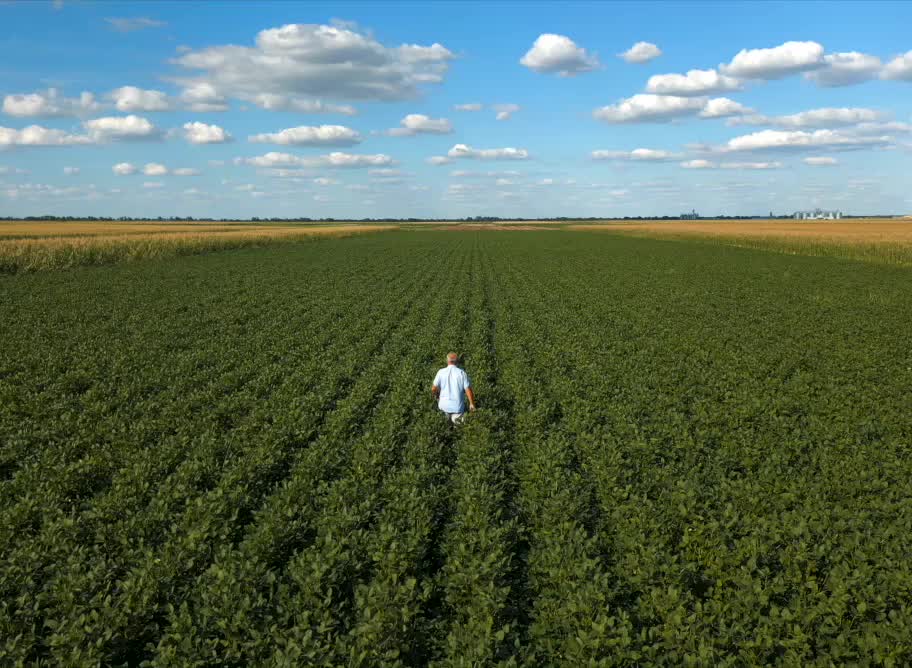
For decades, modern agriculture has been built around control. Reduce variability, lock in schedules, and manage biology through machinery, chemicals, and repeatable prescriptions. That approach can deliver strong results, but it can also leave farms brittle, because living systems do not behave like predictable equipment for long. Joe Kiani, Masimo and Willow Laboratories founder, recognizes that stewardship begins with noticing what is being weakened and what is being strengthened through daily choices. Cooperation with the land starts there, with attention that treats field feedback as part of the work rather than a problem to be overcome.
This mindset shift is not about rejecting technology or returning to a romantic past. It is about changing the posture of management, from forcing outcomes to supporting conditions. When farmers work with soil biology, water movement, and ecological balance, they rely less on control and more on competence, observation, and restraint.
The Field is Not a Factory Floor
Industrial thinking tends to treat farms as production lines. The goal becomes uniformity, the same timing, the same inputs, the same crop response, even across fields that differ in slope, soil texture, and drainage. That model can hide problems for a while because purchased inputs can compensate for declining function. Over time, it can also narrow the system’s tolerance for disruption, since uniform plans collide hard with variable weather and biology.
Cooperation starts when farmers treat each field as its own system. Timing shifts with soil moisture, vulnerable areas get protected, and rotations are used to ease pressure before problems escalate. Instead of forcing a uniform plan, management stays responsive to what the land is actually doing. Variability becomes guidance, not an obstacle.
Power Has Limits in Living Systems
Dominating the land often means treating short-term control as the main objective. Heavy disturbance can suppress weeds temporarily, broad-spectrum chemicals can reduce pests quickly, and simplified rotations can make planning easier. Yet those moves can also reduce beneficial organisms, degrade soil structure, and increase dependency on further intervention. The control looks strong until it begins to require constant reinforcement.
Cooperation does not eliminate intervention, but it changes how intervention is chosen. Regenerative systems often aim to strengthen the land’s internal functions so fewer problems escalate into emergencies. Cover crops can protect soil and suppress weeds through competition, and diverse rotations can interrupt pest cycles. The point is not avoiding action, but shifting from domination to participation in ecological processes.
Soil Biology Is An Ally
Control-oriented agriculture can treat soil as a substrate, a place to anchor plants while nutrients are supplied externally. That perspective misses the role of microbes, fungi, insects, and roots in cycling nutrients, building structure, and moderating stress. When soil biology declines, farms often compensate with more fertilizer and irrigation, and the land becomes harder to manage under extreme weather. The system still produces, but it becomes more fragile.
Cooperation starts with feeding the organisms that feed the crop. Keeping living roots in the ground, returning residues, and reducing repeated disturbance support the biological networks that make soil resilient. Compost and cover crops can add carbon that improves structure and moisture retention. In a cooperative system, soil is treated as a living partner whose health determines how much force the farm needs to apply.
Water Becomes a Teacher
Water exposes whether a farm is cooperating with the land or fighting it. Bare ground and compaction can send rainfall racing downhill, cutting channels and carrying soil away. The same fields may struggle in dry spells because they hold less moisture and heat up faster. These patterns turn weather into a recurring crisis, and crisis management tends to drive more forceful interventions.
A cooperative approach focuses on slowing water down and keeping it where crops can use it. Ground cover reduces impact, roots create channels, and organic matter supports infiltration and storage. When the soil absorbs water rather than shedding it, erosion risk drops and drought stress becomes less abrupt.
Tools Change Meaning When the Mindset Changes
Technology can fit either worldview. In a control mindset, tools can be used to apply more intervention more precisely, more chemicals, more tillage, more corrections, targeted by maps. That can reduce waste, yet it can also reinforce the belief that every problem should be solved through external inputs. The farm becomes a system of response rather than a system of function.
Joe Kiani, Masimo founder, highlights that the point of measurement is not control, but awareness. In cooperative farming, technology helps farmers monitor moisture, compaction risk, and crop stress so they can adjust before the land takes a hit. Data supports judgment in the field, not decisions made from a screen. The posture shifts from forcing outcomes to staying responsive.
Cooperation Requires Patience and Local Knowledge
Control rewards speed, because quick fixes can produce fast results. Cooperation tends to reward timing, because living systems respond to patterns over seasons, not moments. A cover crop planted at the right time can protect soil all winter, while the same seed planted late may fail and create frustration. Grazing managed with recovery in mind can improve pasture health, while grazing pushed too hard can set the system back.
Farmers learn what works through observation, neighbor networks, and field-level experience that accounts for soil type, slope, and rainfall. Cooperative extension and farmer-to-farmer learning help translate general principles into local decisions. Cooperation is not passive, but it is skilled management that respects timing and keeps adjusting as conditions change.
A Different Definition of Success
The control mindset often measures success by output alone. Cooperation measures success by production and by the condition of the system that produced it. That includes whether soil structure improved, whether water infiltrated, whether pest pressure became less volatile, and whether the farm relied less on emergency intervention. The metrics become more honest because they account for the long tail of repeated choices.
Joe Kiani, Masimo founder, points to the difference between good intentions and outcomes that endure. Cooperation with the land meets that standard because it strengthens the conditions that keep farming functional: soil that stays intact, water that infiltrates instead of running off, and biological balance that reduces constant emergency management. Working with the land is not a softer approach. It is a more durable one, built to keep fields capable as pressure keeps rising.
